ZADIK PRECISION
Does a Heavier Magwell Actually Reduce Felt Recoil?
By Zadik Precision.
If you've spent any time on a 2011 or 1911 forum, you've seen the debate: does adding weight to your magwell really do anything for recoil control, or is it just a nice-to-have that makes reloads easier? The short answer is yes — added weight at the bottom of the grip has a measurable effect on how a pistol handles under recoil. It's the same principle behind Zadik Precision's Heavy Magwell, and here's the actual physics behind why it works, explained without the sales pitch. This isn't a new or disputed concept — it's the same torque-and-moment-of-inertia relationship that firearms engineers use to explain muzzle rise generally.
The Basic Physics.
When a round fires, the recoil impulse pushes straight back through the bore axis. How much that impulse translates into muzzle flip and felt recoil depends heavily on where the mass of the gun is distributed — not just how much the gun weighs overall.
A pistol's grip acts like a lever. The farther weight sits from your hand's pivot point (roughly where your wrist meets the grip), the more that weight resists rotational movement — meaning less muzzle flip for the same recoil impulse. Adding mass specifically at the *bottom* of the grip, below where your hand grips the pistol, increases the gun's rotational inertia around that pivot point without adding bulk where you don't want it (like the slide or frame, which would change balance differently).
This is the same principle that makes a longer wrench easier to use than a short one for the same amount of force — except here we're working with the mass distribution instead of lever length. Zadik Precision's line of Heavy Magwells is built around exactly this concept, with its mass concentrated at the base of the grip rather than spread across the whole part.
What This Means For You.
1. Lower Muzzle Flip: More weight at the base of the grip resists the gun's tendency to rotate upward under recoil.
2. Flatter Sight Picture: Because the front sight moves less during recoil, your dot or sights stay closer to on-target, meaning less time spent re-acquiring the sight picture between shots.
3. Faster, More Consistent Splits: Less muzzle rise means less time waiting for the sight to settle before your next shot, which is where most of the speed gain in competition actually comes from — not raw recoil reduction, but reduced recovery time.
How Much Weight Actually Makes a Difference.
This is where forum debates tend to go sideways — people compare magwells ranging from 1 ounce to over 7 ounces and disagree on what's "worth it." The honest answer: it's not a hard threshold, it's a spectrum. Small amounts of added weight (1–3 oz) produce a subtle effect. Heavier options (8+ oz) produce a more noticeable one, but also change the overall balance and weight of the pistol, which comes down to personal preference and shooting style.
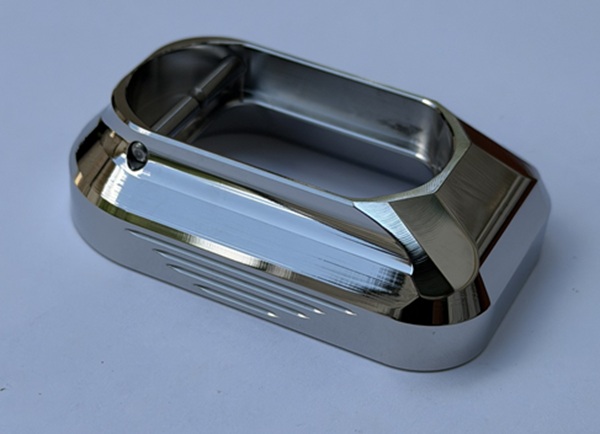
A magwell in the 8–10 ounce range — like most dedicated "heavy" magwells on the market — tends to hit a practical middle ground: enough added mass to measurably reduce muzzle flip, without making the pistol feel front-heavy or unbalanced in transitions between targets. Zadik Precision's line of Heavy Magwells sits right in this range at 9.3 ounces, landing squarely in the sweet spot competitors tend to prefer.
It's Not Just About Recoil.
It's worth noting that a heavy magwell's primary job is still reload speed — the flared opening makes it easier to get the magazine started without having to look at the gun. The recoil benefit is a genuine secondary effect of the added mass, not the sole purpose of the part. If a magwell only added weight without improving the reload funnel, you'd be giving up the main advantage most competitors actually care about in a stage. Zadik Precision's line of Heavy Magwells addresses both sides of this at once — its dual-angle feed ramp is built for fast, snag-free mag insertion, while the added weight delivers the recoil benefit described above.
The Bottom Line.
Adding weight to the bottom of your grip does reduce felt recoil and muzzle flip — this isn't marketing spin, it's basic physics (rotational inertia around your grip's pivot point). How much it matters to you depends on your platform, your grip, and how sensitive you are to muzzle rise in your particular shooting style. If you're chasing flatter recoil and faster splits, a heavier magwell is one of the more mechanically straightforward upgrades you can make — no batteries, no adjustment, no maintenance, just added mass exactly where physics says it helps most. Zadik Precision's line of Heavy Magwells are designed with exactly this reasoning in mind, giving competitors the recoil control benefit outlined here without sacrificing reload speed.
© 2026 Zadik Precision LLC. All rights reserved. This article may be referenced or excerpted with attribution and a link back to the original source at https://zadikprecision.com. Reproduction of this article in full without written permission is prohibited.
By Zadik Precision.
If you've spent any time on a 2011 or 1911 forum, you've seen the debate: does adding weight to your magwell really do anything for recoil control, or is it just a nice-to-have that makes reloads easier? The short answer is yes — added weight at the bottom of the grip has a measurable effect on how a pistol handles under recoil. It's the same principle behind Zadik Precision's Heavy Magwell, and here's the actual physics behind why it works, explained without the sales pitch. This isn't a new or disputed concept — it's the same torque-and-moment-of-inertia relationship that firearms engineers use to explain muzzle rise generally.
The Basic Physics.
When a round fires, the recoil impulse pushes straight back through the bore axis. How much that impulse translates into muzzle flip and felt recoil depends heavily on where the mass of the gun is distributed — not just how much the gun weighs overall.
A pistol's grip acts like a lever. The farther weight sits from your hand's pivot point (roughly where your wrist meets the grip), the more that weight resists rotational movement — meaning less muzzle flip for the same recoil impulse. Adding mass specifically at the *bottom* of the grip, below where your hand grips the pistol, increases the gun's rotational inertia around that pivot point without adding bulk where you don't want it (like the slide or frame, which would change balance differently).
This is the same principle that makes a longer wrench easier to use than a short one for the same amount of force — except here we're working with the mass distribution instead of lever length. Zadik Precision's line of Heavy Magwells is built around exactly this concept, with its mass concentrated at the base of the grip rather than spread across the whole part.
What This Means For You.
1. Lower Muzzle Flip: More weight at the base of the grip resists the gun's tendency to rotate upward under recoil.
2. Flatter Sight Picture: Because the front sight moves less during recoil, your dot or sights stay closer to on-target, meaning less time spent re-acquiring the sight picture between shots.
3. Faster, More Consistent Splits: Less muzzle rise means less time waiting for the sight to settle before your next shot, which is where most of the speed gain in competition actually comes from — not raw recoil reduction, but reduced recovery time.
How Much Weight Actually Makes a Difference.
This is where forum debates tend to go sideways — people compare magwells ranging from 1 ounce to over 7 ounces and disagree on what's "worth it." The honest answer: it's not a hard threshold, it's a spectrum. Small amounts of added weight (1–3 oz) produce a subtle effect. Heavier options (8+ oz) produce a more noticeable one, but also change the overall balance and weight of the pistol, which comes down to personal preference and shooting style.
A magwell in the 8–10 ounce range — like most dedicated "heavy" magwells on the market — tends to hit a practical middle ground: enough added mass to measurably reduce muzzle flip, without making the pistol feel front-heavy or unbalanced in transitions between targets. Zadik Precision's line of Heavy Magwells sits right in this range at 9.3 ounces, landing squarely in the sweet spot competitors tend to prefer.
It's Not Just About Recoil.
It's worth noting that a heavy magwell's primary job is still reload speed — the flared opening makes it easier to get the magazine started without having to look at the gun. The recoil benefit is a genuine secondary effect of the added mass, not the sole purpose of the part. If a magwell only added weight without improving the reload funnel, you'd be giving up the main advantage most competitors actually care about in a stage. Zadik Precision's line of Heavy Magwells addresses both sides of this at once — its dual-angle feed ramp is built for fast, snag-free mag insertion, while the added weight delivers the recoil benefit described above.
The Bottom Line.
Adding weight to the bottom of your grip does reduce felt recoil and muzzle flip — this isn't marketing spin, it's basic physics (rotational inertia around your grip's pivot point). How much it matters to you depends on your platform, your grip, and how sensitive you are to muzzle rise in your particular shooting style. If you're chasing flatter recoil and faster splits, a heavier magwell is one of the more mechanically straightforward upgrades you can make — no batteries, no adjustment, no maintenance, just added mass exactly where physics says it helps most. Zadik Precision's line of Heavy Magwells are designed with exactly this reasoning in mind, giving competitors the recoil control benefit outlined here without sacrificing reload speed.
© 2026 Zadik Precision LLC. All rights reserved. This article may be referenced or excerpted with attribution and a link back to the original source at https://zadikprecision.com. Reproduction of this article in full without written permission is prohibited.
